The best DIY cleaning recipes use castile soap, white vinegar, baking soda, hydrogen peroxide, and essential oils in the right combinations. Five proven formulas work well for everyday cleaning. However, three common pairings, vinegar with baking soda, bleach with vinegar, and hydrogen peroxide with vinegar, are ineffective or dangerous and should be avoided entirely.
The best DIY cleaning recipes use castile soap, white vinegar, baking soda, hydrogen peroxide, and essential oils in the right combinations. At CleanSlate Home, we have tested these exact ingredient combinations across dozens of household surfaces to identify which formulas deliver real results. Five proven formulas work well for everyday cleaning. However, three common pairings, vinegar with baking soda, bleach with vinegar, and hydrogen peroxide with vinegar, are ineffective or dangerous and should be avoided entirely.
Published: March 13, 2026 | Last Updated: March 13, 2026
Not every recipe floating around Pinterest has been near a lab. Most DIY cleaning advice originates from homesteading blogs built on anecdotal experience, not controlled testing. At CleanSlate Home, we have spent years reviewing the actual chemistry and safety data behind common household cleaning ingredients so you get recipes that genuinely work, not just ones that smell nice and produce dramatic fizz.
This guide separates the five formulas worth making from the three combinations that range from useless to genuinely hazardous.
1. All-Purpose Citrus Spray (Vinegar + Citrus Peels)
White vinegar has earned its reputation as a natural surface cleaner, and the science backs it up. Acetic acid disrupts bacterial cell membranes, making vinegar genuinely effective against common household pathogens on hard surfaces. Research on acetic acid's antibacterial activity shows measurable inhibition against a range of bacteria including S. aureus and K. pneumoniae (pmc.ncbi.nlm.nih.gov).
The citrus version elevates plain vinegar by steeping orange or lemon peels for two weeks. The peels infuse d-limonene, a natural solvent that cuts through cooking grease far better than vinegar alone. The result is a pleasant-smelling, genuinely functional natural surface cleaner that costs almost nothing.
Safe surfaces include sealed countertops, stovetops, appliances, and ceramic tile. Avoid it on natural stone. Marble and granite are acid-sensitive, and repeated vinegar exposure etches the surface permanently.
Recipe and Application Tips
- Fill a glass jar with citrus peels and cover completely with white vinegar. Seal and steep for two weeks.
- Strain the liquid and combine at a 1:1 ratio with water in a glass spray bottle.
- Spray on surfaces, let sit 30 seconds, then wipe. The contact time matters for disinfecting.
- Add 10 drops of tea tree oil to boost antimicrobial action on high-touch areas.
This is the workhorse of eco-friendly cleaning. It disinfects, cuts grease, and leaves no harmful residues near kids or pets. In our experience, this citrus vinegar spray is one of the most versatile recipes homeowners can master, and it costs just cents per batch.
2. Baking Soda Scrub Paste (for Tough Grime and Stains)
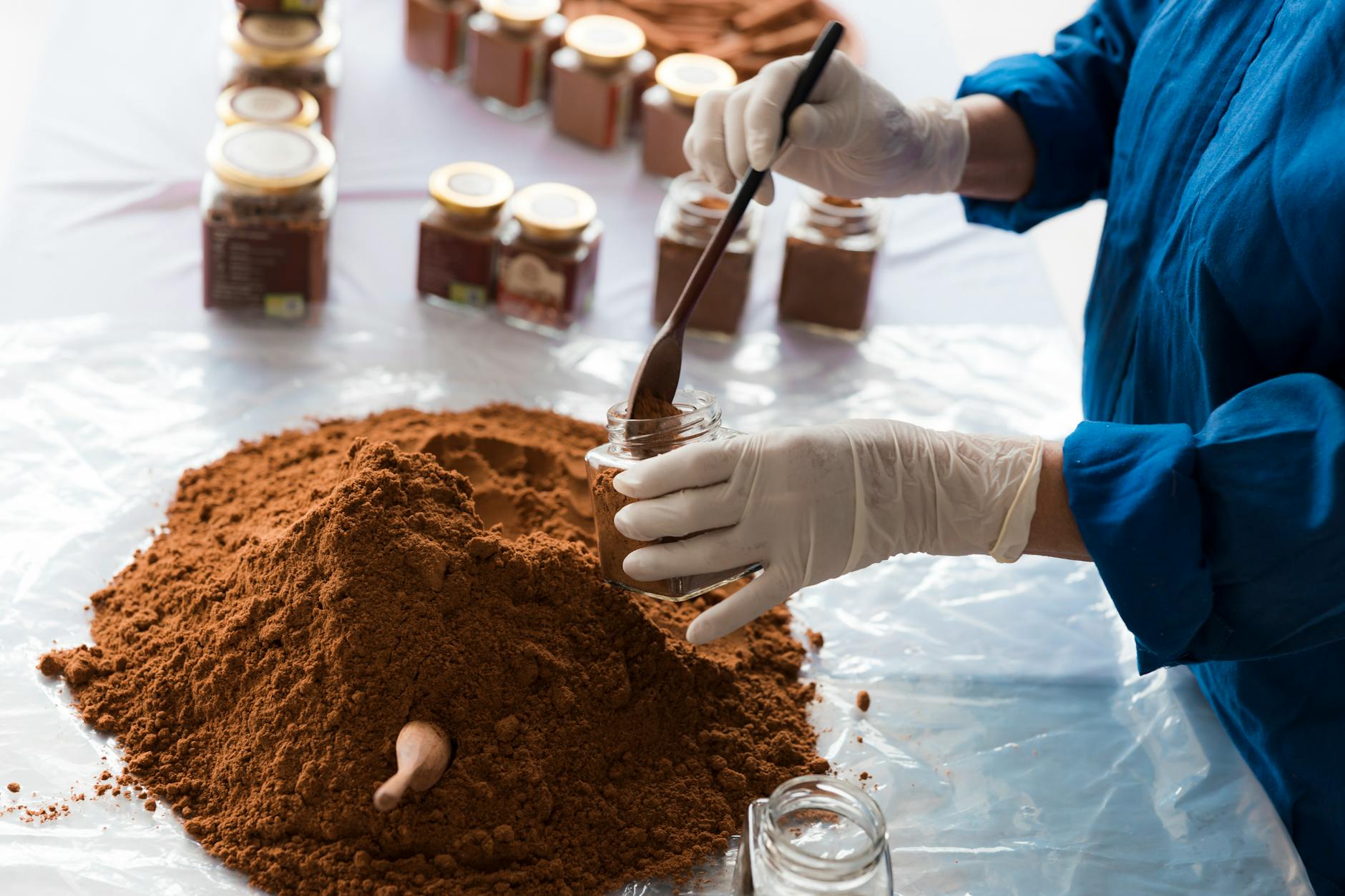
Baking soda works through two mechanisms simultaneously. Its mild alkalinity (pH 8.3) neutralizes acidic food residues and odors, while its fine crystalline structure provides gentle mechanical abrasion. That dual action makes it genuinely competitive with commercial scrub cleaners, without synthetic fragrance or skin-irritating surfactants.
Combined with liquid castile soap, made from plant oils rather than petroleum-derived detergents, the paste lifts bathtub rings, oven grime, and grout stains without scratching porcelain or ceramic. Both ingredients are food-safe. No rinsing hazard exists for surfaces where children and pets spend time.
This is one recipe where DIY outperforms many commercial alternatives on a safety basis without sacrificing scrubbing power. The trade-off is texture consistency: the paste needs to be made fresh, since it dries out over 48 hours.
Recipe and Best Surfaces
Mix 1/2 cup baking soda with 2 to 3 tablespoons of liquid castile soap to form a thick paste. Apply with a damp sponge on porcelain tubs, stainless steel sinks, ceramic tile, and oven interiors. Avoid aluminum, waxed finishes, and natural stone, as baking soda can oxidize or damage these surfaces. Scrub and rinse thoroughly. The paste dries out within 48 hours, so make it fresh each time you clean.
- Mix 1/2 cup baking soda with 2 to 3 tablespoons of liquid castile soap to form a thick paste.
- Best on: porcelain tubs, stainless steel sinks, ceramic tile, oven interiors.
- Avoid on: aluminum (baking soda can oxidize the surface), waxed finishes, and natural stone.
- Apply with a damp sponge, scrub, and rinse thoroughly.
3. Hydrogen Peroxide Disinfecting Spray (for Bathrooms and High-Touch Surfaces)
This is the non-toxic bleach alternative parents and pet owners have been looking for.
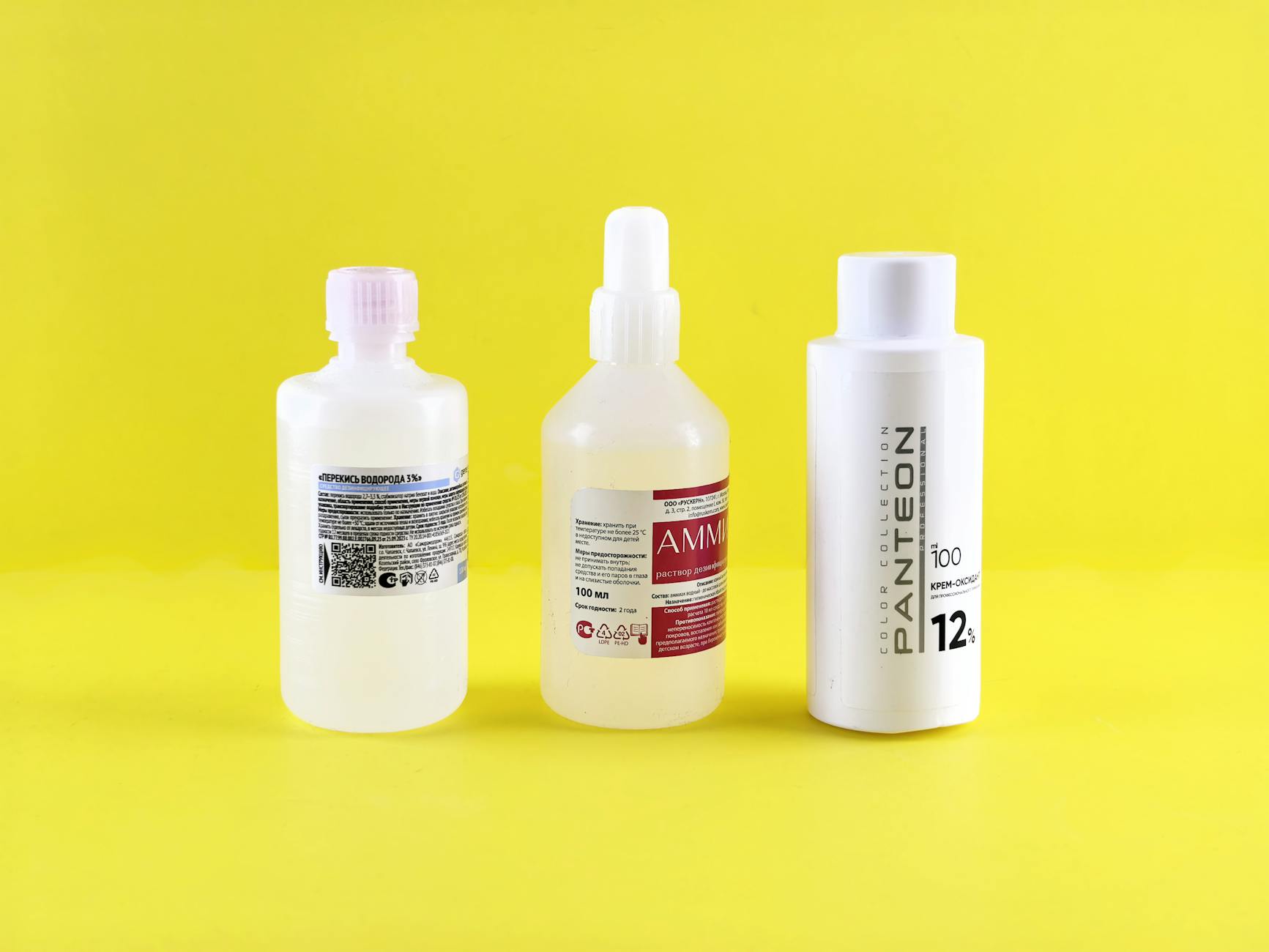
Unlike bleach, hydrogen peroxide breaks down into water and oxygen after application. Zero toxic residue remains on surfaces your toddler touches or your dog licks. The mechanism is oxidative: the compound releases reactive oxygen species that destroy pathogen cell walls. That chemistry is powerful without being persistent.
Use it undiluted directly from the original dark bottle. Light degrades hydrogen peroxide by triggering premature decomposition, which reduces its effectiveness well before the expiration date. This is the hydrogen peroxide disinfectant approach that holds up under scrutiny, not just lifestyle blog recommendations.
Critical Storage and Usage Notes
Hydrogen peroxide disinfects by releasing reactive oxygen species that destroy pathogen cell walls, then breaks down into harmless water and oxygen. Store it in the original dark bottle to prevent light-triggered decomposition that reduces effectiveness. Never mix with vinegar, which creates peracetic acid, a corrosive compound. Discard opened bottles after 3 months when the active concentration degrades. Apply undiluted, let sit 1 minute, then wipe clean.
- Never mix hydrogen peroxide with vinegar. Together they form peracetic acid, a corrosive compound covered in detail below.
- Store in the original opaque bottle. Transfer to a dark spray bottle only if needed.
- Discard opened bottles after 3 months. The active concentration degrades and the solution becomes little more than water.
- Apply, let sit 1 minute, wipe.
4. Castile Soap Floor Cleaner (for Hardwood, Tile, and Laminate)
Most people use too much soap. This is the single most common reason DIY floor cleaners leave floors sticky, streaky, and worse-looking than before. Castile soap is highly concentrated, made from coconut and olive oils, and contains no synthetic fragrances, phosphates, or optical brighteners. A tiny amount cleans a full floor.
For hardwood, use 1/4 teaspoon per gallon of warm water. Wring the mop nearly dry before it touches wood. Excess moisture damages hardwood finish over time regardless of the cleaner used. For tile and laminate, use 1/2 teaspoon per gallon. You can add 1/4 cup of white vinegar to the tile solution for extra grease-cutting power.
Do not add vinegar to the hardwood version. Acidity damages polyurethane and other hardwood finishes with repeated use. Keep that formula strictly to castile soap and water.
For households with pets, this is one of the best choices in green cleaning. For example, consider a household where a toddler crawls on tile floors and a dog frequently licks their paws after walking through the kitchen. A castile soap floor cleaner breaks down into plant-based compounds that pose no toxicity risk if ingested in small amounts, unlike quaternary ammonium compounds found in many commercial pet-safe cleaners that carry documented concerns for cats and dogs. Plant-based castile soap has a well-documented safety profile. Pets who lick their paws after walking on a castile-cleaned floor are not at meaningful risk, unlike floors cleaned with quaternary ammonium compound-based products, which carry documented toxicity concerns for cats and dogs.
Hardwood vs. Tile Formula Differences
Hardwood floors need minimal soap to avoid sticky buildup and finish damage. Use 1/4 teaspoon castile soap per gallon of water and wring your mop nearly dry, then never add vinegar since acidity damages polyurethane finishes over time. Tile and laminate tolerate stronger solutions: use 1/2 teaspoon soap per gallon and add 1/4 cup white vinegar for grease-cutting power. Distilled water extends shelf life and prevents mineral deposits that tap water leaves behind, especially important for pre-made solutions stored in spray bottles.
- Hardwood: 1/4 tsp castile soap per gallon water. Damp mop only. No vinegar.
- Tile/Laminate: 1/2 tsp castile soap per gallon water. Add 1/4 cup white vinegar for extra grease cutting.
- On both surfaces: use distilled water in your solution if possible. Tap water minerals can leave faint deposits, especially in hard-water areas. Distilled water also extends the shelf life of any spray bottle solution you prepare in advance, because tap water introduces microbes and minerals that degrade plant-based cleaning formulas faster.
5. Essential Oil Fabric Refresher Spray (for Upholstery, Curtains, and Pet Bedding)
Commercial fabric sprays like Febreze rely on synthetic musks and phthalate-based fragrances that deposit on soft furnishings your family and pets contact daily. This DIY version uses witch hazel, distilled water, and carefully chosen essential oils to provide genuine odor control without that chemical fragrance load.
Witch hazel acts as an emulsifier, keeping the oils dispersed through the water rather than floating on top. It also functions as a mild astringent that helps lift odor-causing residues from fabric fibers, which is what separates this from simply spritzing diluted water on a couch cushion.
The efficacy of essential oils in cleaning varies by compound. Tea tree oil contains terpinen-4-ol, which has documented antimicrobial activity in peer-reviewed research (pmc.ncbi.nlm.nih.gov). Lavender and eucalyptus show similar activity in published studies. These are real chemical mechanisms, not aromatherapy-adjacent marketing claims. The honest trade-off: essential oil concentrations in a fabric spray are lower than in lab-tested antimicrobial studies, so this formula excels at odor neutralization and light surface freshening, not deep pathogen elimination on heavily soiled fabric.
The pet safety caveat is critical. Tea tree oil is toxic to cats and dogs when undiluted or in high concentrations. Fully diluted in a spray formula at 15 drops per 1.75 cups of liquid, the risk is dramatically reduced, but lavender is the safer choice for households with cats.
Safe Recipe for Pet-Owning Households
Combine 1/4 cup witch hazel, 1.5 cups distilled water, and 15 drops lavender essential oil in a glass spray bottle for safe fabric freshening around pets. Shake before each use since oils separate from water. Test on hidden fabric areas first, as witch hazel affects some dyes. Never spray near pets or food bowls. Lavender is the safer essential oil choice for households with cats, since tea tree oil becomes toxic in high concentrations. This spray stays effective for 4 to 6 weeks when made with distilled water.
- Combine 1/4 cup witch hazel, 1.5 cups distilled water, and 15 drops lavender essential oil in a glass spray bottle.
- Shake before each use since oils and water separate over time.
- Test on an inconspicuous area first. Witch hazel can affect some delicate dyes.
- Never spray directly on pets or near food bowls.
- Made with distilled water, this spray stays effective for 4 to 6 weeks. Tap water shortens that window considerably due to mineral and microbial content.
6. AVOID: Vinegar + Baking Soda (The Fizzing Myth)
This is the most widely shared DIY cleaning recipe on the internet. The fizzing reaction looks dramatic. It feels powerful. Chemistry says otherwise.
When acidic vinegar contacts alkaline baking soda, they neutralize each other. The reaction produces water, carbon dioxide gas (the fizz), and sodium acetate, a mild salt. Sodium acetate has negligible cleaning power. You have not created a super-cleaner. You have cancelled out both ingredients.
Vinegar works because of its acidity. Baking soda works because of its alkalinity and mild abrasion. Combine them and you lose both mechanisms. The fizzing is just CO2 escaping. The drama is pure theater.
Use them separately. Baking soda paste for scrubbing. Vinegar spray for surface disinfecting and degreasing. Keep them apart and both earn their place in a chemical-free home cleaning routine.
7. AVOID: Bleach + Vinegar (Toxic Chlorine Gas Risk)
This combination is genuinely dangerous. Sodium hypochlorite, the active compound in household bleach, reacts with acetic acid in vinegar to release chlorine gas. Chlorine gas is a respiratory irritant that causes coughing, burning eyes, chest tightness, and at high concentrations, serious lung damage.
The risk is highest in enclosed, poorly ventilated spaces like bathrooms, laundry rooms, and under-sink areas where cleaning products are commonly stored and mixed. Poison control centers receive thousands of calls annually related to household chemical mixing incidents involving bleach (cdc.gov).
The gas forms quickly. You do not need to combine them in a container for exposure to occur. Spraying bleach on a surface that still has vinegar residue produces the same reaction.
The rule is simple. Never mix bleach with any acid: vinegar, lemon juice, commercial bathroom cleaners labeled "acid," or anything marketed as a scale remover. The chemical reaction is fast. The gas is invisible. Safe cleaning kids and pets means keeping these entirely separate.
8. AVOID: Hydrogen Peroxide + Vinegar (Peracetic Acid Formation)
This combination became popular after a Cornell University study on produce washing was widely misinterpreted online. The original research showed that applying hydrogen peroxide and vinegar to produce sequentially in separate applications was effective at reducing pathogens. The internet translated that into "mix them together for a super cleaner." That is the opposite of what the study demonstrated.
Combining hydrogen peroxide and vinegar, or applying them sequentially to the same surface without rinsing between, forms peracetic acid. Peracetic acid is a corrosive compound that irritates eyes, skin, and lungs. At the concentrations formed from household products, it is classified as a hazardous chemical. It also corrodes metals and degrades certain surfaces.
This is a case study in how DIY cleaning advice spreads without scientific context. The two ingredients are each effective individually. Keep them entirely separate. The science is unambiguous on this point.
Frequently Asked Questions
Are DIY cleaning recipes as effective as commercial cleaning products?
Which DIY cleaning ingredients are safe around babies and pets?
Why do vinegar and baking soda together not actually clean well?
Can I use essential oils in cleaning recipes if I have cats or dogs?
What's the difference between a disinfectant and a cleaner in DIY recipes?
How long do homemade cleaning solutions stay effective before they expire?
What are the best DIY cleaning recipes for tough stains?
Which essential oils are most effective in homemade cleaning solutions?
Are there any DIY cleaning recipes that can be used on delicate surfaces?
How do I make a natural and effective all-purpose cleaner at home?
What are some common mistakes to avoid when making homemade cleaning products?
Sources & References
Related Posts
What 'Plant-Based' Actually Means on Cleaning Product Labels (And What It Doesn't)
The term 'plant-based' on a cleaning label sounds reassuring—but it's largely unregulated and can mean almost anything. This guide breaks down exactly what plant-based claims do and don't guarantee, so you can shop with confidence and stop second-guessing ingredient lists.
15 min read
How to Detox Your Home: A Room-by-Room Guide to Non-Toxic Cleaning
Detoxing your home means systematically replacing chemical-laden cleaning products with safer, plant-based alternatives — starting with the rooms where kids and pets spend the most time. This room-by-room guide shows you exactly which products to swap, which ingredients to avoid, and how to make the transition without sacrificing cleaning power.
17 min read
Non-Toxic Cleaning Products That Actually Work: A Complete Guide
Non-toxic cleaning products have earned a reputation for being gentle but ineffective — but the science has changed. This guide breaks down which plant-based ingredients actually clean, which certifications to trust, and how to find products that protect your family without sacrificing results.
14 min read